Tears, tributes and a goal: How Lionel Messi ended one of international soccer’s greatest-ever careers
Lionel Messi's extraordinary Argentina career ended in tears, tributes and one final goal as he bid farewell after 21 years with the national team.
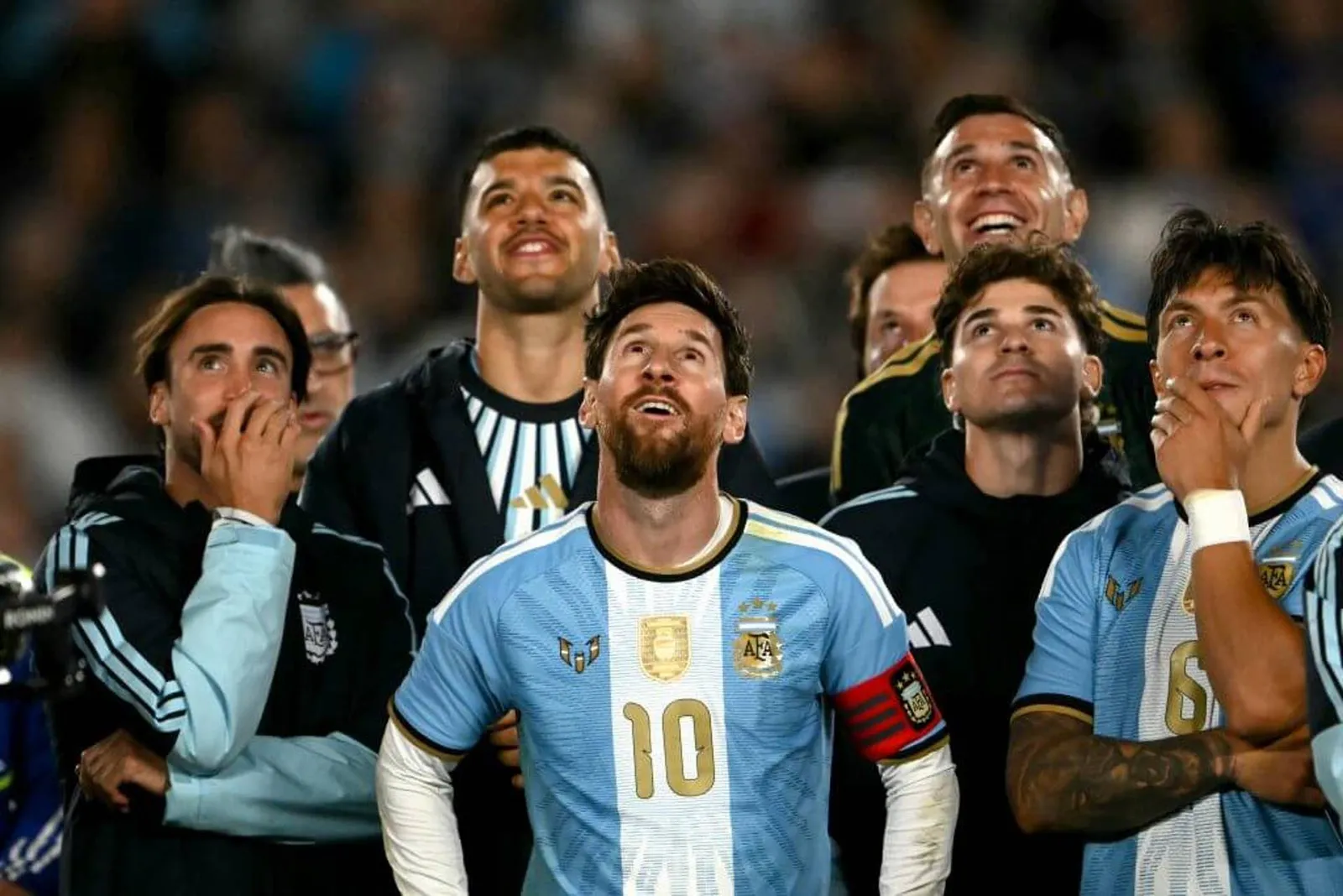
Surrounded by his family and battling through tears, Lionel Messi brought down the curtain on his international career Tuesday night with a goal and two assists in his 208th appearance for Argentina.
Messi, 39, played the full 90 minutes in a 3-0 exhibition-game win in Buenos Aires over Benin, No. 89 in the FIFA world rankings. The match was a farewell dedicated to the player many consider the greatest of all time. He scored Argentina’s third via a penalty after assisting goals by Nicolás Otamendi and Nico Paz. Otamendi himself made his 140th and final appearance for Argentina.
In the final excerpt from The Soccer 100, we look at the Argentinian who thrived at Barcelona before realising a dream with his country
In Argentina, they called the game Messi’s “last tango,” turning the historic Estadio Monumental into a shrine to a national hero. Fans filled the arena, bowing to their idol, chanting “Messi!” on a loop. A giant blue and white Argentina jersey adorned the field before the game. It had Messi’s No. 10 but instead of his name across the shoulders, it read simply “Gracias.” The game paused in the 10th minute for a dedicated minute of applause to their living legend. Pyrotechnics went off to mark the moment.
Benin players joined the celebration, embracing Messi, clasping his hand. Messi raised his arms to his faithful, then shuffled awkwardly, half-hiding from the scorching spotlight as fans continued to sing his name.
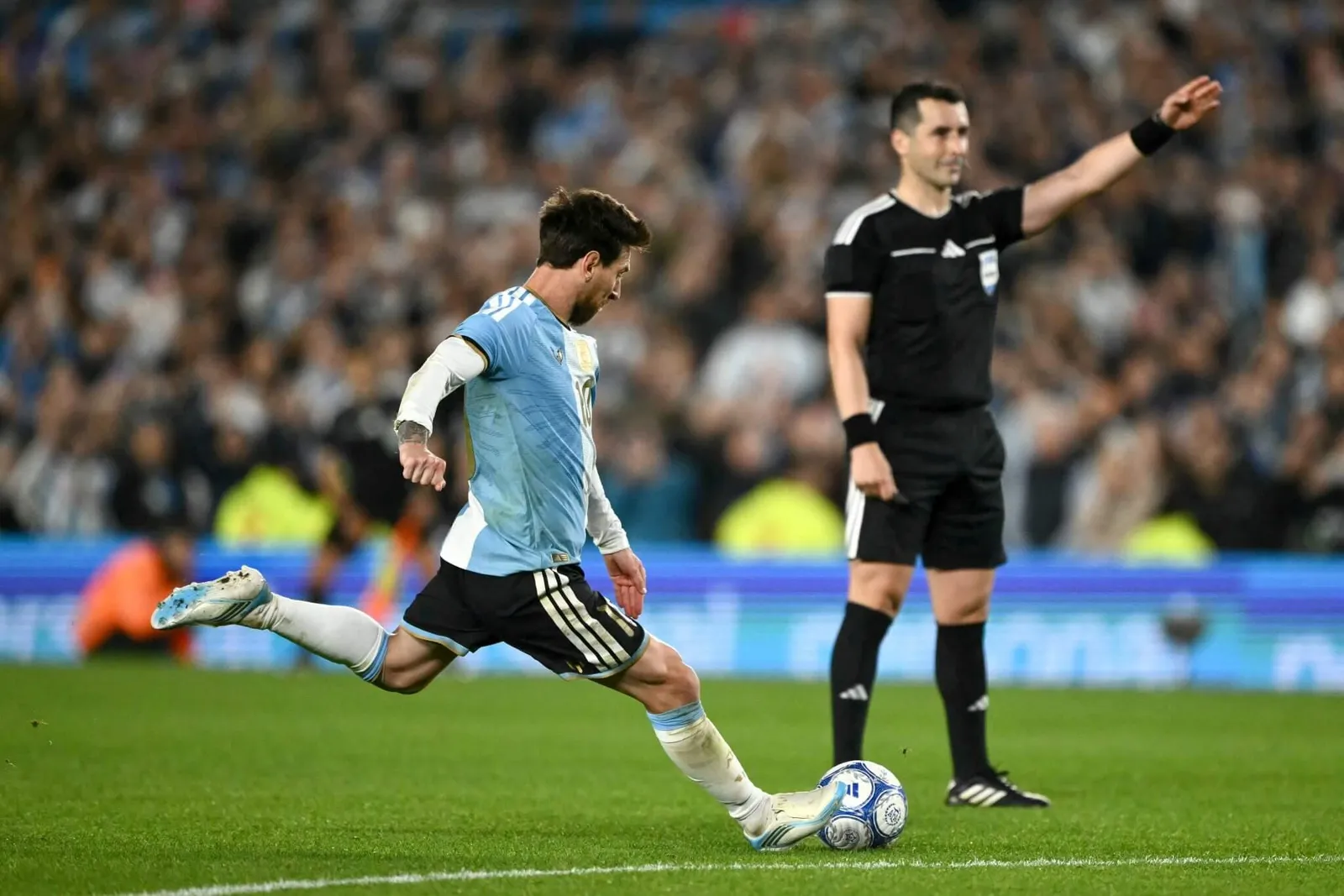
Messi scored for Argentina for the final time in Tuesday’s farewell gameLuis Robayo/AFP via Getty Images
Before the game, thousands lined the streets, tracking the route of Messi’s final bus journey to the national stadium, seeking one last snapshot of their hero on their smartphones. Benin players attempted to take selfies with him on the field after the final whistle.
Footage emerged of Messi appearing to shed tears on the bus, overwhelmed by the reception. Another huge No. 10 jersey, attached to a helicopter, flew through the skies over Rosario (Messi’s hometown) ahead of his farewell game. There are generations of Argentines who have never known a national team without Messi. His first appearance was in August 2005, a time before the iPhone, Instagram or Uber existed, and when Mariah Carey’s “We Belong Together” was on a 10-week stretch at the top of the Billboard Top 100 music charts.
During the pre-match national anthem, it was Argentina head coach Lionel Scaloni whose eyes moistened when Messi was joined by his sons Thiago, Mateo and Ciro on the field. Messi’s wife, Antonela, and mother, Celia, watched proudly from the stands. Messi stood beside Emiliano Martínez, the 34-year-old Chelsea and Argentina goalkeeper, who’d had an “M” carved into his haircut to mark the occasion.
Where to start? Copa America wondergoals? World Cup final brilliance? Or right back to the Under-20s? Messi best moments in blue and white
After the game, Messi took to the microphone and addressed his nation.
“To not come here anymore is going to hurt a lot,” he said. “I swear to you, if it were up to me, I would love to be here (playing) for the rest of my life, because playing for the Argentine national team is the most beautiful thing that can ever happen to you.”
He gave thanks to the fans for following his team around the world, and also to his teammates, who he said helped him fulfill his “childhood dream” of becoming a world champion. Messi, a man best known for doing his talking with his feet, joked that he was speaking today “more than ever.” He movingly consoled son Thiago, for whom the emotions of the night had proved too much. He paid tribute to his father, Jorge, who died just two months ago, saying his dad was the first person in his mind on this night.
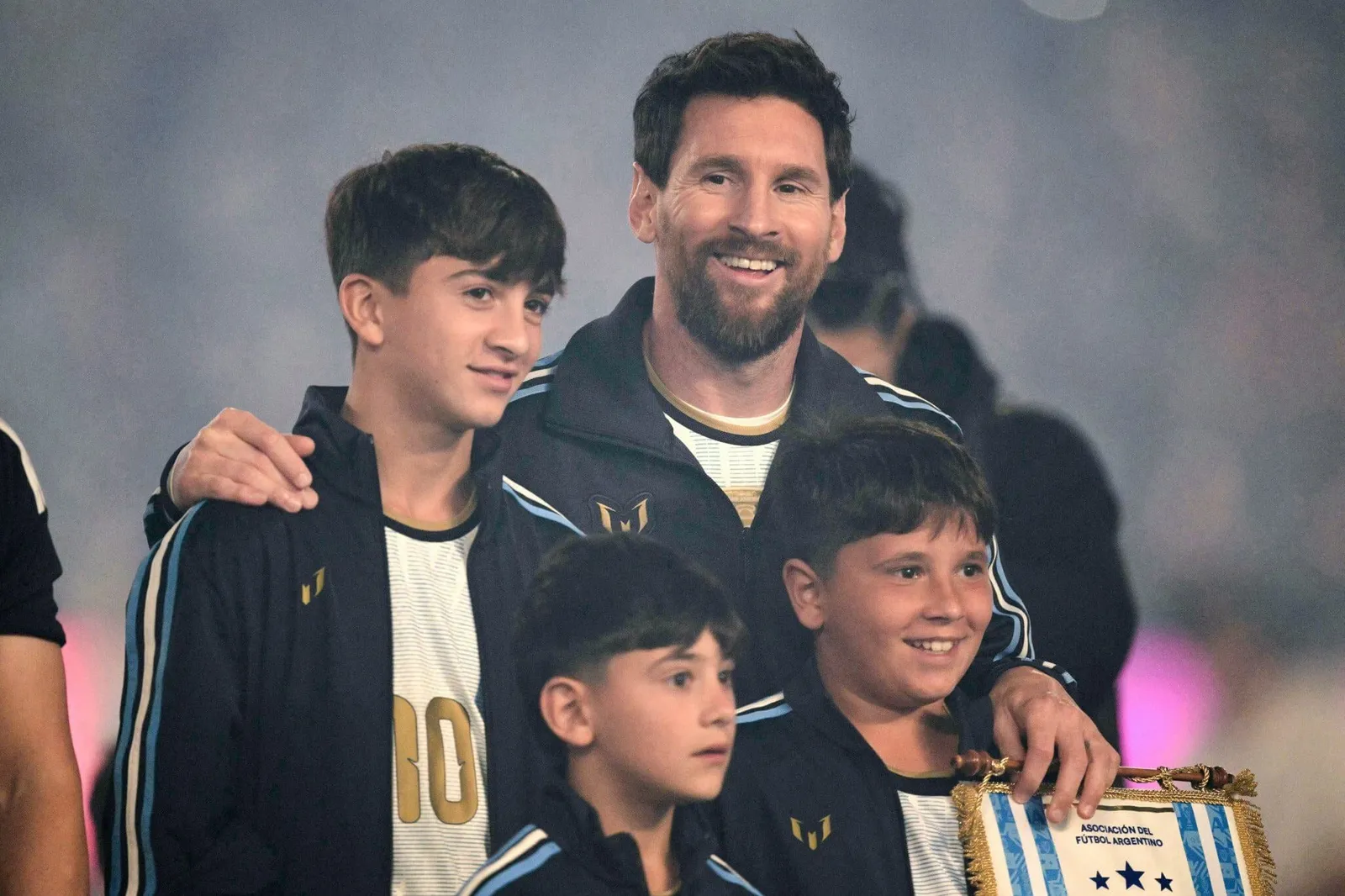
“I am going to miss it and miss you,” Messi told the crowd. “I am thankful to God for being Argentine, proud to be Argentine and of having achieved the dream with all of you.”
In the build-up to the game, the tributes flowed. Messi received a doctorate from the University of Buenos Aires. Adidas altered the profile picture on its many social media accounts, mirroring the “No. 10 Gracias” message seen on the playing field. Ronaldinho, the Brazilian soccer icon and a former teammate at Spanish club Barcelona, wrote on Twitter that Messi had “made us smile” and “etched” his name into the history of not only his country, but “the whole world.”
Neymar, another Brazilian who played with Messi at Barcelona and Paris Saint-Germain, wrote on Twitter that he wanted to thank him for “making me love football even more.”
Elsewhere, the world’s attention had been diverted to the soap opera surrounding Cristiano Ronaldo, Messi’s longtime rival, especially when they were with Barcelona and Real Madrid respectively, whose final days with the Portuguese national team at age 41 have descended into an extraordinary bout of finger-pointing and acrimony with coach Jorge Jesus.
Messi made the decision to retire in August following the World Cup, where Argentina lost in the final against Spain, and his father’s passing. Messi played for his country in six World Cups, reaching the final on three occasions, and winning the tournament in Qatar in 2022. He had captained his country since 2011, winning Copa América in 2021 and 2024, and became both his country’s record holder for appearances (208) and goals (126). Upon announcing his decision, Messi said ending his international career “hurts deep in my soul.” He had previously said he was unsure how long he would continue playing following the death of his 68-year-old father on Aug. 8.
International retirement does not mean Messi will cease to play altogether, as he is still an Inter Miami player in Major League Soccer. His contract there runs until the end of the 2028 season.
As for the actual game on Tuesday night, it was largely relegated to a sideshow when set against the magnitude of the main event: showering Messi with love and gratitude.
The first half, in particular, unfolded at the pace of a testimonial match and much of Argentina’s play appeared more concerned with securing Messi a goal than actually producing a coherent performance.
For a while, it even appeared that Argentina might be frustrated in that aim. Messi came close to scoring on three occasions, first forcing a save from distance and twice sliding in close to goal but failing to provide his trademark finishing touch. The best chance of the first half came for Benin, when Junior Olaitan ought to have punished sloppy defending but instead sent the ball wide after receiving a pull-back from Rodolfo Aloko.
In the second half, however, Benin’s resistance was breached when Otamendi turned in Messi’s corner. A beautiful curling strike from Paz, the 22-year-old playmaker who plays for Italian team Como, doubled Argentina’s advantage.
Messi finally crowned his send-off with a goal in the 70th minute, converting from the penalty spot into the top corner. The whole Argentina team celebrated with their captain, one final time.
Adam Crafton is a British journalist based in New York City, having relocated from London in 2024. He primarily covers soccer for The Athletic. In 2024, he was named the Sports Writer of the Year by the Sports' Journalist Association, after winning the Young Sports Writer of the Year award in 2018.
Tags
More in International Football
View all ›10 Oct 2026
International FootballRafa Marquez embraces the Mexico-USMNT rivalry, including his role as leading villain
8 Oct 2026
International FootballWith clear needs, USMNT can embrace the hope that comes with its top prospects
8 Oct 2026
International FootballCristiano Ronaldo’s farewell to Portugal is becoming a tragic mess. Goodwill is draining away
About the author
Collins Godfrey
Writer