Is Barcelona the New Bayern? and LaLiga the New Bundesliga?
One would wonder whether Barcelona have become too good, or LaLiga has become too weak.
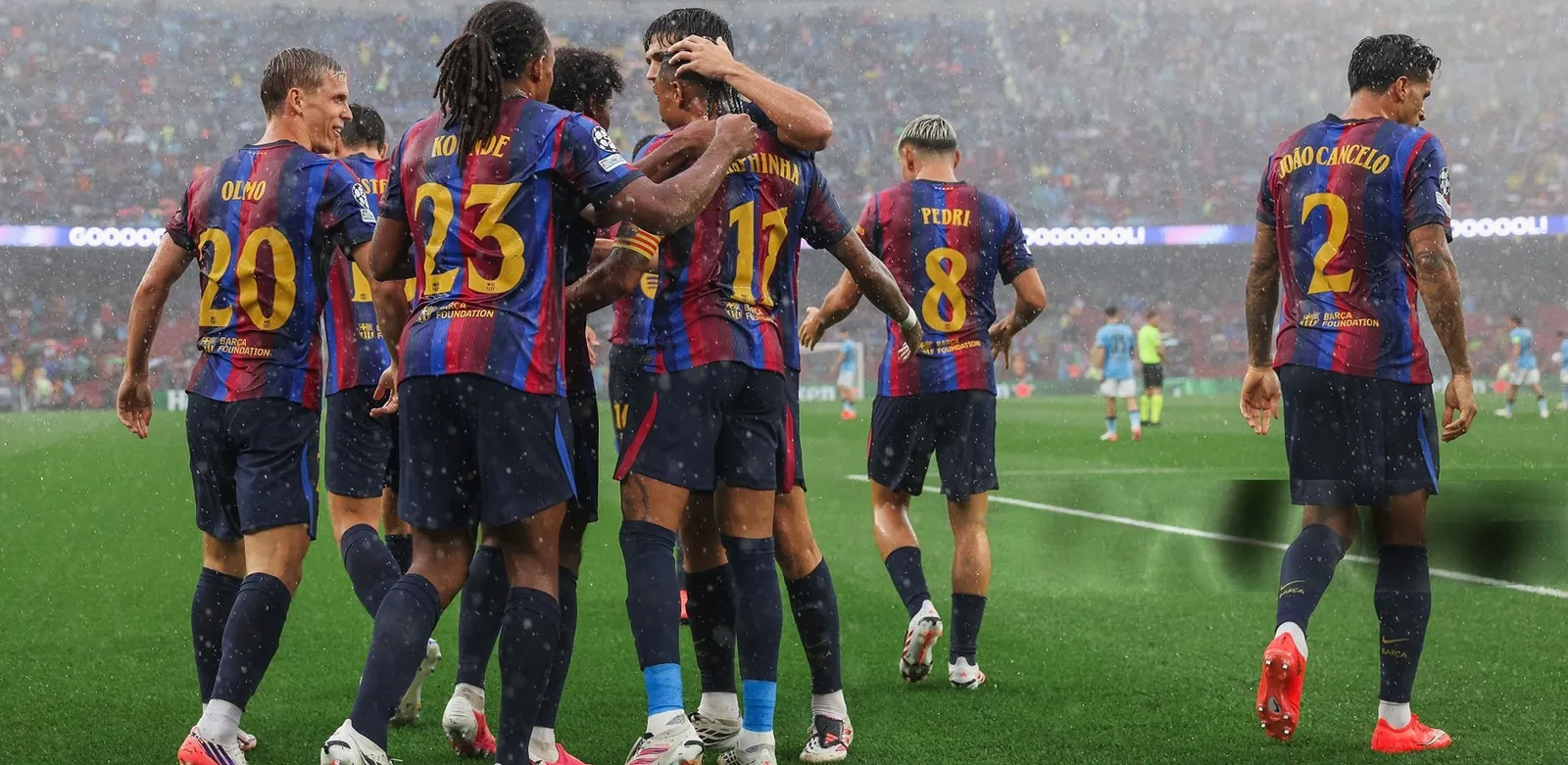
Barcelona have started their 2026/27 season looking invincible. More than 30 goals in their opening matches, a perfect league start, and Hansi Flick’s team making LaLiga games look like training drills.
You watch the football and think: This Barcelona team is frightening.
But then you look at the opponents, the scorelines and the wider condition of Spanish football, and another question begins to creep in.
So, have Barcelona become extraordinarily good, or has LaLiga gradually become too weak to challenge them consistently?
This is not an attempt to diminish Barcelona. Their football is excellent. Their pressing, movement, technical quality and attacking relationships deserve credit. But football does not exist in a vacuum. A team’s domestic dominance must also be understood within the competitive environment around it.
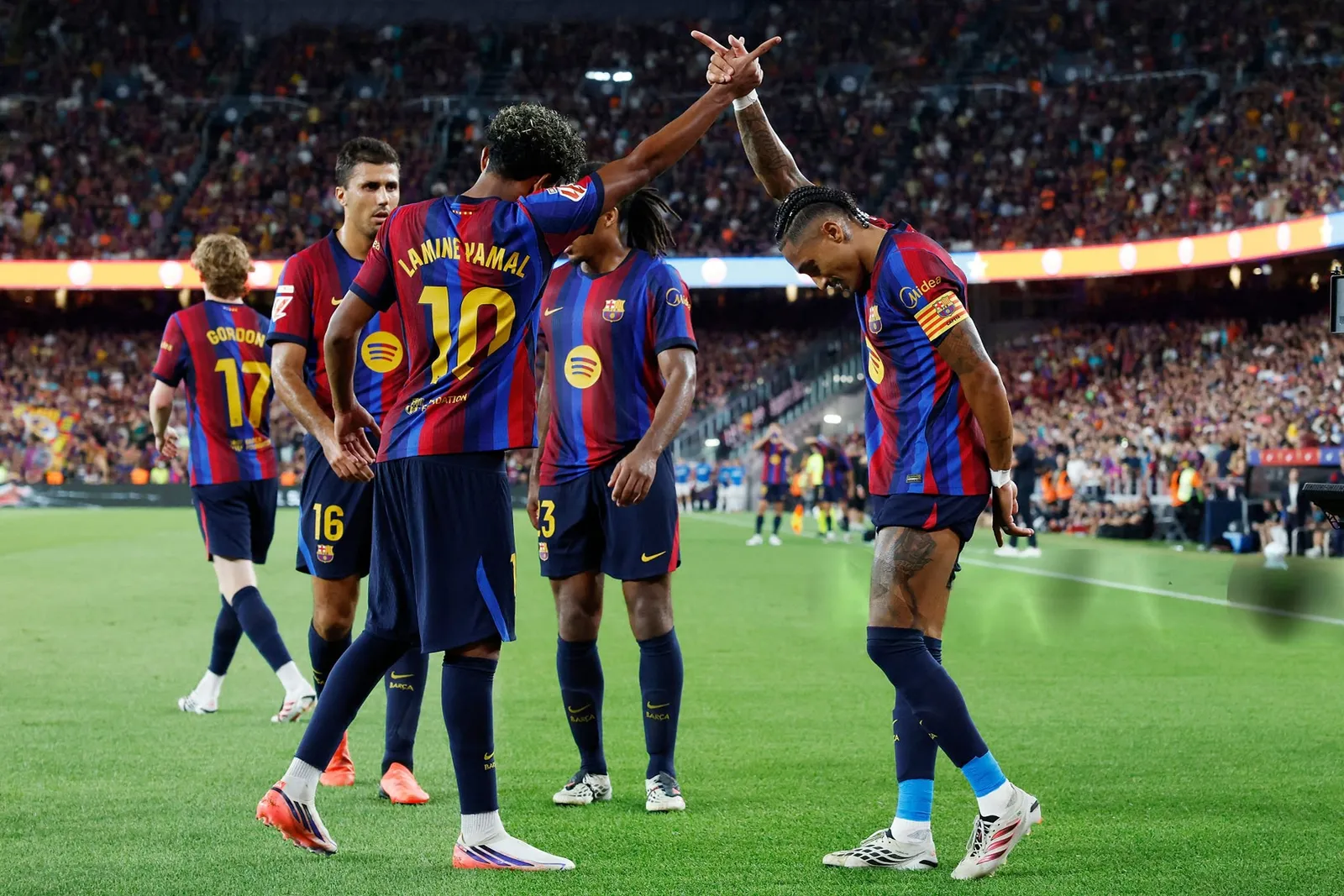
And right now, LaLiga appears to be developing a very serious problem.
THE GAP IS NO LONGER JUST ABOUT FOOTBALL
A case study of the English Premier League, for example;
The Premier League’s financial advantage over LaLiga is now impossible to ignore.
In the 2025 summer transfer window, English clubs spent more than £3 billion, while Spanish clubs spent approximately £592 million, according to BBC analysis. The difference wasn't created simply by Real Madrid and Barcelona spending more or less in a particular window. It reflected a much wider structural imbalance between the two leagues.
England’s television revenues, commercial income and international reach allow clubs far beyond the traditional 'top six' to spend sums that many Spanish teams simply cannot match.
Meanwhile, LaLiga operates with strict squad-cost controls that link spending to a club’s financial capacity. These rules were meant to promote sustainability, but they also limit how aggressively clubs can rebuild when revenue is low, or finances have deteriorated.
That creates a difficult cycle:
A club loses European football. Its revenue falls. Its spending limit tightens. Its best players become harder to retain. The squad becomes weaker. European qualification becomes even more difficult.
At some point, financial discipline stops feeling like a route back to competitiveness and starts looking like a permanent ceiling.
LOOK AT VALENCIA
Valencia are perhaps the clearest example of how far a historic Spanish club has fallen.
This is a club that once competed regularly in the Champions League, reached European Cup finals and produced teams capable of challenging the strongest sides in Europe.
Today, the conversation is very different.
Valencia have been operating with extremely limited resources, relying heavily on loans, free transfers, academy players and inexpensive recruitment. Their reported spending on recent arrivals has been a fraction of what comparable Premier League clubs can invest.
Could you imagine that Valencia CF spent €9 million on 13 incoming players during the 2026 summer transfer window, according to Transfermarkt? Yes!
Think about that for a moment. Thirteen incoming players for €9 million. What level of quality and squad transformation can a club like Valencia realistically expect with that kind of investment?
Then they face Barcelona, who have the resources, depth, and attacking quality to punish every weakness. Their recent 5–0 defeat to Barça only intensified the scrutiny surrounding Valencia’s difficult start.
Their current crisis is not simply about one poor result. It is about years of instability, ownership controversy, managerial changes and declining sporting ambition.
And this is the point: when a club with Valencia’s history is struggling to assemble a competitive squad, the problem extends beyond Valencia itself.
It affects the league.
WHERE DID SEVILLA AND VILLARREAL GO?
There was a time when Spanish football offered more than two or three enormous clubs (Real Madrid, Barcelona and Atlético Madrid).
Sevilla were specialists in European competition, winning the Europa League repeatedly and developing a recruitment model that allowed them to compete above their financial weight.
Villarreal reached the Champions League semi-finals in 2022 and won the Europa League in 2021. Valencia were regular European contenders. Athletic Club, Real Sociedad, Real Betis and other teams could make life extremely uncomfortable for the giants.
The league had depth. Middle-class teams could develop players, recruit intelligently, retain key talent, and occasionally defeat Europe's biggest clubs.
But that system has weakened over the past five to ten years.
Sevilla’s financial problems have affected their ability to retain and replace players, and they came close to relegation last season. Valencia’s sporting decline has been prolonged. Villarreal can still produce strong teams, but their resources and consistency do not match those of the biggest clubs in England.
This does not mean every Spanish club is poor or that quality football has disappeared. It means the number of clubs capable of sustaining European-level competitiveness appears smaller than it once was.
That distinction matters.
COMPARING LALIGA WITH THE PREMIER LEAGUE AGAIN, AND THE CASE OF EUROPEAN COMPETITION!
Consider the depth of the Premier League.
A club outside the traditional top six can spend £30 million, £40 million or more on a single player. It can attract international footballers with high wages, maintain a deep squad and replace injured players without completely changing its level.
A club that has just been promoted from the Championship can spend £100 million, £200 million or even more trying to strengthen its squad, knowing that significant investment would be necessary to compete and stay in the Premier League.
Look at promoted clubs such as Nottingham Forest, Sunderland, and recently promoted Hull City, Coventry and Ipswich. Their spending power, commercial opportunities and access to the English football economy give them resources that many established clubs in other European leagues simply do not possess.
Spending does not automatically make every Premier League team technically superior to every Spanish team. Spanish football still possesses exceptional coaching, technical education and tactical sophistication.
But money influences the intensity of competition.
It determines how many quality players remain in a league, how deep squads are, how quickly teams recover from injuries and whether clubs can compete across tight domestic and European schedules.
And there is a reason English clubs have performed so well in the Europa League and Conference League in recent years.
West Ham, Chelsea and Crystal Palace have all won the Conference League in the past 3/4 years. Tottenham won the Europa League final, while Manchester United have also featured in the final. Aston Villa have become a serious European competitor and champions too, and English clubs continue to perform strongly across UEFA’s competitions.
The new European formats have created more opportunities for mid-table clubs to compete internationally. But opportunity alone is not enough. The financial depth of English football means these clubs can rotate their squads, recruit better players and maintain a higher level across multiple competitions.
Compare a team such as Brighton, Crystal Palace, Brentford, Sunderland, or Bournemouth with a similarly positioned club in LaLiga, or even Ligue 1, Serie A, and the Bundesliga. The difference is not only recently obvious in technical ability, but it can also be seen in squad depth, recruitment budgets, wages and the quality of replacements available from the bench.
That is why English clubs can continue to perform well in these competitions. They are not simply entering Europe with a starting eleven. They are often bringing an entire squad capable of competing at a high level.
The Premier League’s financial advantage has helped create a much broader group of clubs with serious spending power.
LaLiga’s wealth, meanwhile, remains heavily concentrated around Barcelona and Real Madrid, with Atlético Madrid occupying the next tier.
Deloitte reported that LaLiga generated €4.1 billion in revenue in 2024/25, but Real Madrid and Barcelona accounted for more than half of the league’s total revenue.
That is an extraordinary concentration at the top.
NOW, BACK TO BARCELONA
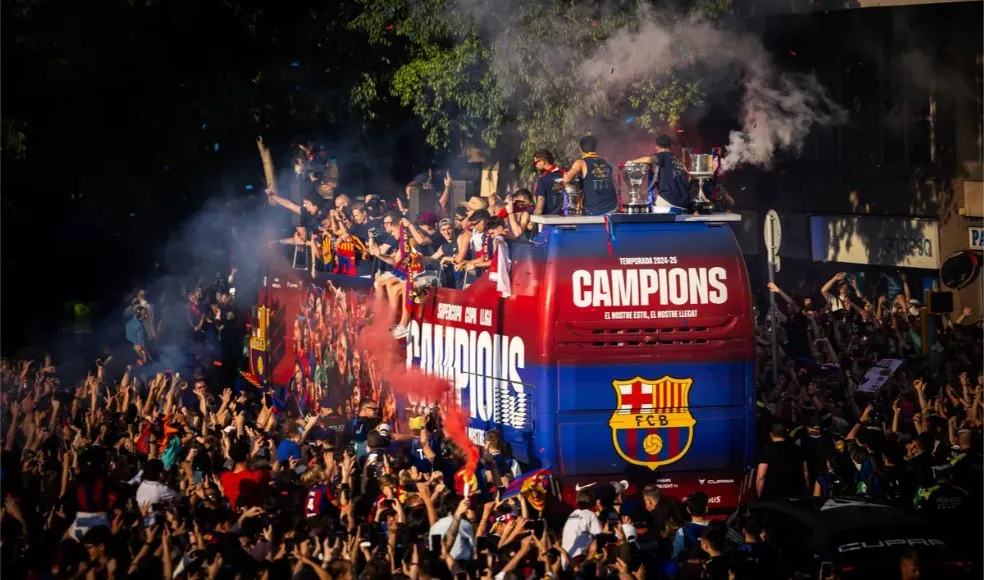
Barcelona’s current attacking numbers are not fake. They are not simply the product of weak opposition.
As I said earlier, Flick has built a side with outstanding technical players, aggressive pressing and a frightening attacking ceiling.
But their recent European record raises an interesting contradiction.
Are they just 'local champions' while still struggling to reach the very top of Europe?
Since 2015, Barcelona have failed to win the Champions League. They reached the semi-finals in 2024/25 and lost to Inter in a dramatic tie. In 2025/26, they were eliminated by Atlético Madrid in the quarter-finals.
This question is important because domestic dominance and European dominance are not the same thing.
A team can overwhelm opponents in its domestic league and still struggle when the opposition possesses comparable technical quality, greater physical resistance, deeper squad options or more experience managing two-legged knockout football.
That raises a reasonable question about how much pressure Barcelona face across an entire domestic season compared with the one they face in Europe.
THE BUNDESLIGA COMPARISON
For years, Bayern Munich dominated the Bundesliga, with a financial and sporting advantage over most of its domestic rivals.
That dominance did not mean Bayern were an inferior team. It meant their domestic environment often offered fewer consistently competitive challenges than the Champions League.
Many people attach an unfair assumption to players who perform in the Bundesliga. They see someone score 40 goals in Germany and immediately question whether that player could replicate the same numbers elsewhere. In doing so, they sometimes diminish the league, its players and its competition.
But it is interesting that a similar conversation is now beginning to surround LaLiga and Barcelona.
Raphinha was close to relegation with Leeds, yet he has since developed into one of Europe's best attackers and a Ballon d’Or contender at Barcelona.
Marcus Rashford recorded more than 25 goal contributions during his loan spell in Spain last season, but has struggled to produce any impact since returning to the Premier League with Manchester United.
Karim Adeyemi, A Gordon, and Gabriel Jesus are flying in Spain. Other players have also found new levels after moving to Barcelona or other Spanish clubs.
Even Rodri’s controversial lip-read comments, where he appeared to describe Valencia as "They're really weak. They haven't got past the halfway line," adds fuel to the wider debate over defending and pressing standards in LaLiga.
Of course, a player can improve after joining Barcelona. A new coach, better teammates, a different tactical system and greater confidence can transform a footballer.
The reverse can also happen. A player may struggle after leaving a club where the system suited him perfectly.
So, this is not simply about claiming that every player who performs well in Barcelona or LaLiga would fail elsewhere.
It is about asking whether the competitive environment makes it easier for certain players to dominate domestically, build confidence and produce extraordinary numbers without facing the same level of pressure every week.
That is the question.
LaLiga risks moving towards a structure similar to the one the Bundesliga has been criticised for: a small group of financially powerful clubs operating above the rest of the league, while the middle class struggles to keep up.
Real Madrid and Barcelona possess enormous global brands, commercial power, historic prestige and access to elite talent. Atlético Madrid can compete at the highest level when its recruitment and coaching align.
Behind them, however, the financial gap becomes increasingly difficult to ignore.
The result is a two-speed league: the giants operating at one level, while much of the division is only trying to survive.
CREDIT WHERE IT IS DUE
Barcelona deserve credit for what they have built, especially over the past five years, as Joan Laporta and Deco have helped pull the club back from the financial and sporting difficulties it faced.
They have developed young talent, recovered from financial problems, redeveloped their stadium and created a team capable of playing spectacular football.
Their current attacking form is a reflection of genuine quality, not simply an illusion. But a strong club and a weakened league can exist at the same time.
The concern is not that Barcelona are winning domestically. It is that only a couple of clubs seem capable of consistently challenging the financial, sporting and institutional power of the biggest teams.
When middle-class teams disappear, the league loses something. It loses unpredictability. It loses depth. It loses the regular European challengers that once made Spanish football so difficult to compete against.
So, have Barcelona become too good?
Absolutely. They may be one of, if not the best teams in Europe right now.
But has LaLiga become less competitive beneath them?
That is a serious question, and I think the answer is becoming increasingly obvious.
Image Credits: @BBCSport & @GettySport / @GettyImages
Tags
More in Analysis
View all ›About the author

Chikamso 'Mr Focus' Okoye
Editor
Writer/Editor at Somtosports.com & Writer/Admin at Football Focus. I write to feel good